
She Wasn't Aggressive. Neither Was I.
Aug 04, 2026Originally published on The Conscious Vet Substack. Subscribe for weekly essays at theconsciousvet.substack.com.
What a feline medicine lecture, my cat Kiwi, and one sentence at the AVMA conference taught me about fear, behavior, and the labels we choose.
Lessons Across Species Series
One Sentence Changed Everything
I was sitting in a continuing education lecture at the AVMA conference when one sentence made everything else in the room go quiet for me.
The speaker was Dr. Petra Černá, a veterinarian with extensive advanced training in feline medicine and small animal internal medicine. She was speaking about how we approach cats in veterinary medicine, and she said we should never call a cat aggressive.

I will be honest. That made me pause.
Because I have met cats who very much appeared to want to take me apart. Cats who come out of the carrier already flattened, hissing, swatting, lunging, and aiming for every exposed body part. In the moment, it is easy to use the word aggressive. It is a word that feels quite fitting. It tells the team to be careful. It tells us to move slowly. It tells us this cat may hurt someone.
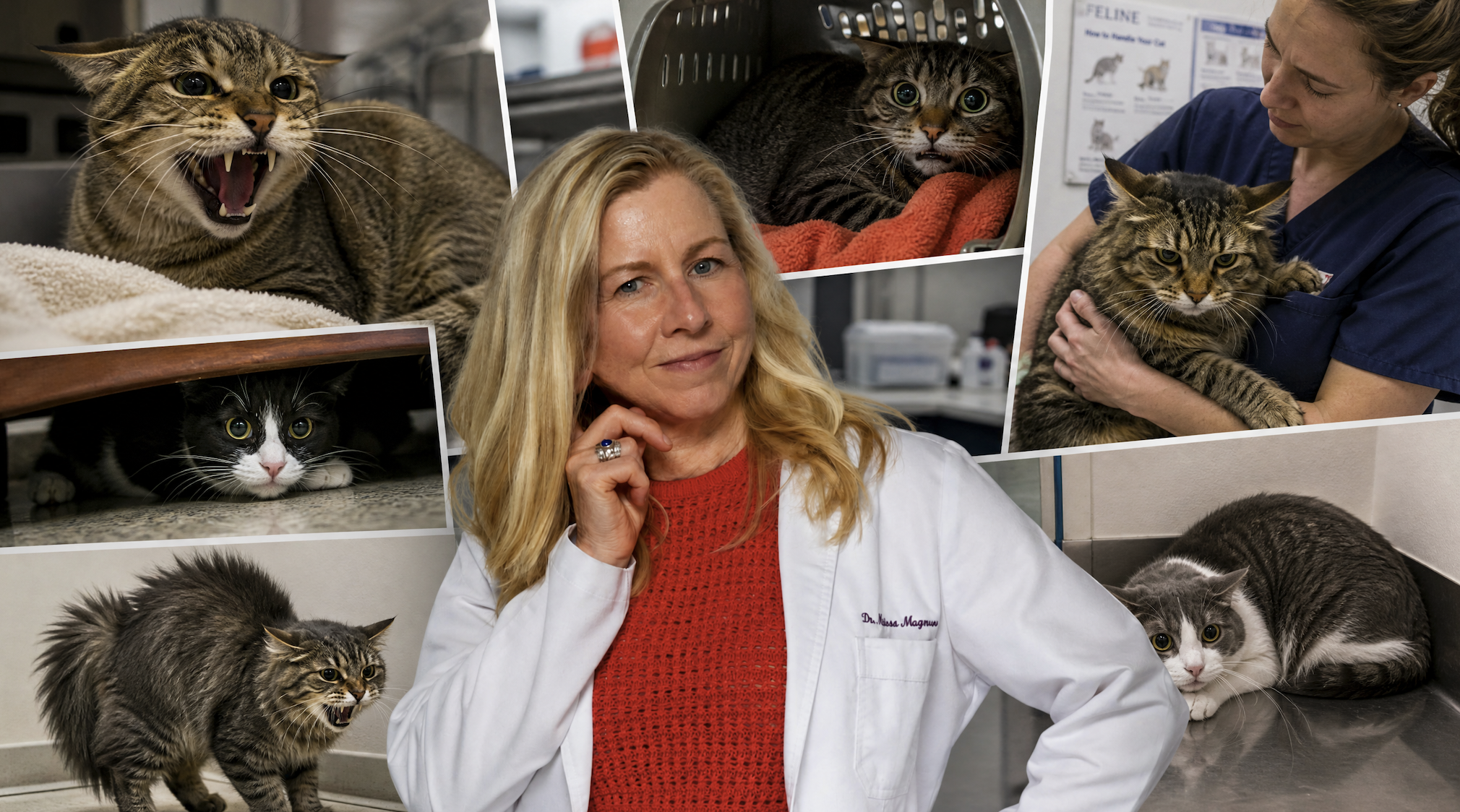
But then she reframed it.
“Cats act like this because they do not feel safe.”
And I had this immediate, slightly uncomfortable thought.
Wait. What?
I’ve been feeling unsafe lately, all the time.
Does that make me aggressive?
Well. Sometimes, yes.
I sat with that for a minute. Because it was not a comfortable place to land. I am a veterinarian. I am supposed to be the calm one in the room. I am supposed to read behavior, not exhibit it. But sitting in that lecture hall, physically safe, surrounded by colleagues, I realized my nervous system was not entirely convinced it was safe at all.
The world feels unstable right now in ways that are hard to articulate without sounding dramatic. The political noise. The collective anxiety that seems to have moved into everyone’s baseline. The low-grade hum of people who are tired and scared and not entirely sure what is coming next. I live in that world too. I absorb it too. And sometimes, without fully realizing it, I react from it.
That is not aggression. That is a response to feeling unsafe.
Dr. Černá gave me the language for something I had been living but not naming.
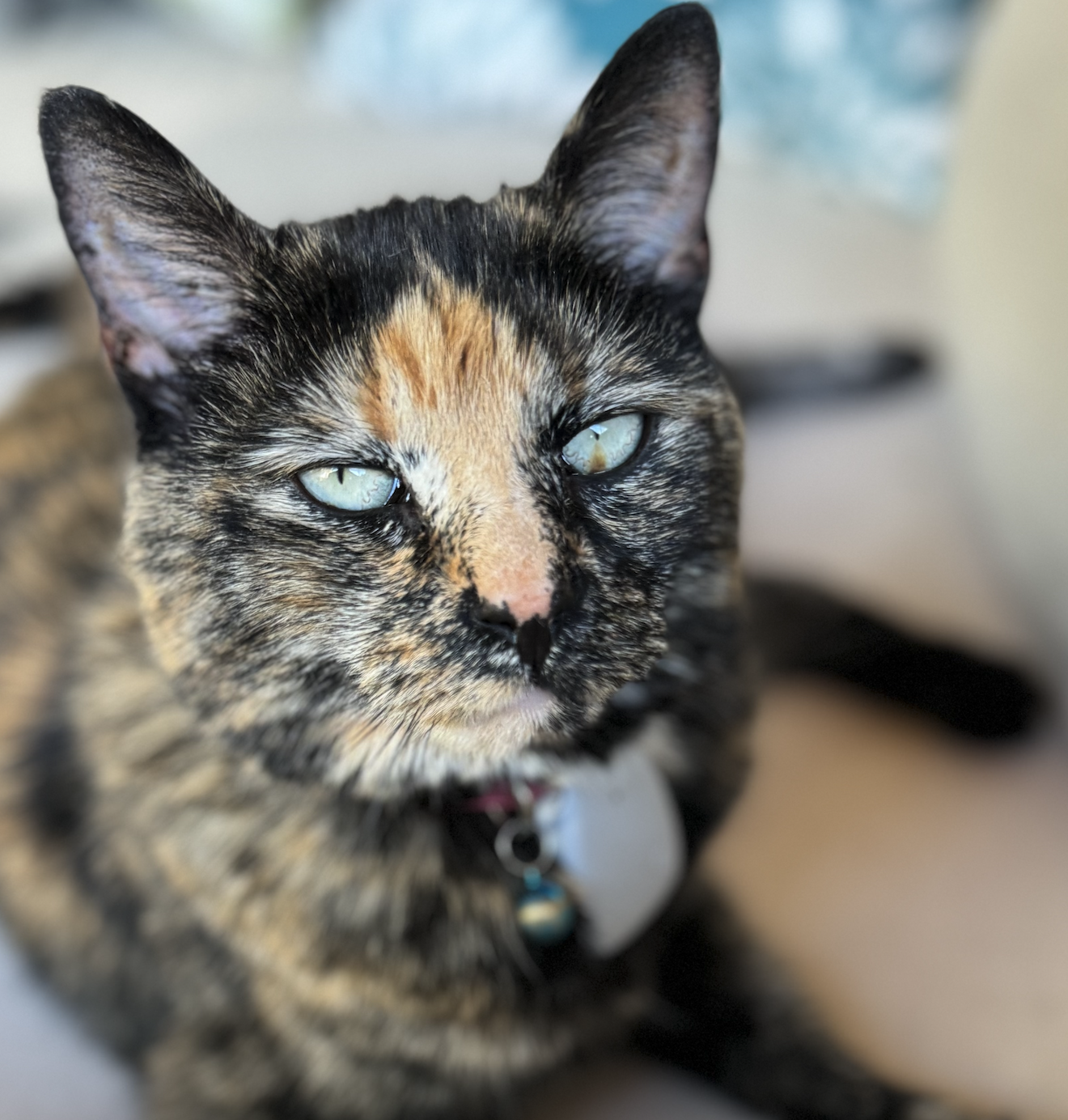
Then I thought about my cat, Kiwi.
Kiwi is twelve years old. I have lived with her for twelve years. I am a veterinarian with thirty years of experience across more species than most people know exist. And every single morning, without fail, Kiwi defeats me.
Here is how it goes. I am getting ready for work. And then I hear her coming. It is not a walk — it is a trot. There is a particular spring in her step, almost theatrical, like she has somewhere important to be and she has decided that place is my bathroom. She comes toward me with what I can only describe as intent.
And it makes me feel unsettled. Every. Single. Day.
If I pet her, we are fine. For exactly two to four pets. After that, she may bite me. If I do not pet her at all, she will also bite me. The window is narrow, the rules are unclear, and after twelve years I have not cracked the code. I get it right maybe half the time.
I have always called this Kiwi being particular. Opinionated. A little dramatic or just plain spicy. She is a tortoiseshell, after all.
But sitting in that lecture, I thought about it differently.
Maybe Kiwi does not feel safe.
And that stopped me completely. Because how? She has lived in our home her entire life. She is fed, played with, petted, and loved. She has more soft places to sleep than most humans have square footage.
But safety is not always the same as care.
Maybe being touched past her limit does not feel safe. Maybe mornings feel unpredictable in ways I do not understand. Maybe the cue I am missing is not behavioral at all — maybe it is sensory, internal, something happening in her body that I will never fully see.
Twelve years. Thirty years of veterinary experience. And Kiwi is still teaching me something.
Behavior Is Communication
Then my mind went somewhere else entirely.
I thought about clients.
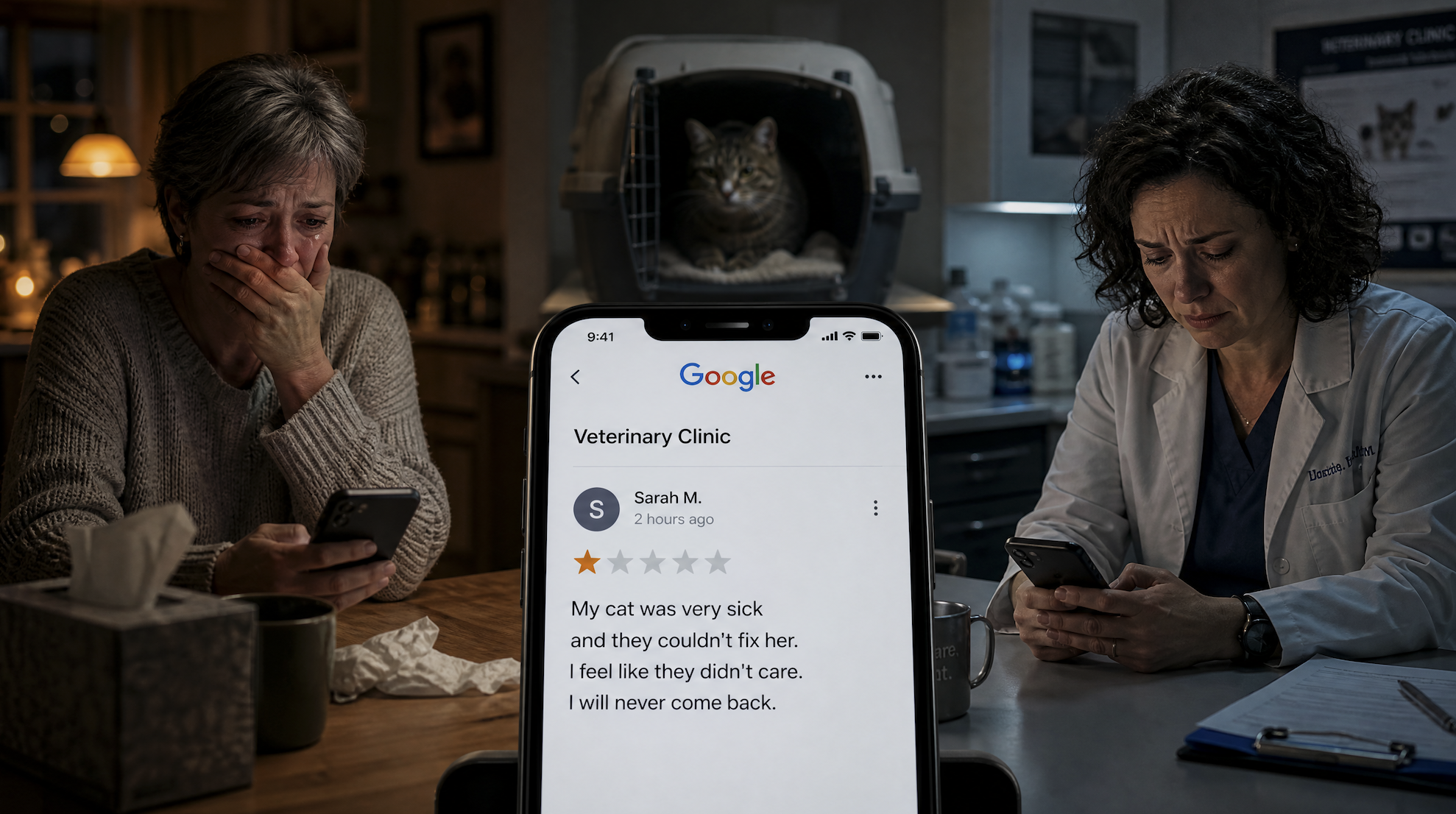
When someone leaves a one-star review because they feel their veterinarian did not make their pet better, that behavior may not come from cruelty. Their pet was sick. They did not have answers. They were scared about money, prognosis, pain, guilt, whether they had missed something important. They felt powerless in an exam room or on the phone. So they reached for the nearest form of control.
They felt unsafe.
Then the veterinarian reads that review and feels unsafe too.
Now the client is unsafe, the pet is unsafe, the veterinarian is unsafe, and everyone is reacting from that place. It sounds dramatic until you think about how quickly it happens and how rarely anyone names what is actually driving it.
The Label Changes the Question
Here is the pattern I cannot stop thinking about.
Behavior is communication. Negative behavior is often communication from a body that does not feel safe.
That does not mean behavior cannot cause harm. A cat bite matters and a dog growl matters. An angry email can hurt a team that tried hard to help. We still need boundaries. We still need accountability.
But the label matters because the label shapes what we do next.
If I call a cat aggressive, I have made the cat the problem.
If I call a cat unsafe, my next question changes entirely.
What made this feel unsafe?
That question opens a door. It makes me look at the carrier, the car ride, the smell of the hospital, the barking dog in the lobby, the unfamiliar hands, the cold table, the previous bad experience. Cats are not small dogs. Their sensory world is different. Their relationship with control is different. Their threshold for novelty is different.
A cat’s sense of smell is extraordinary. When the carrier comes out smelling like the last stressful visit, that may be the first alarm bell — before the cat has even left the house. Then the car moves. Then the hospital doors open and layers of unfamiliar sound and scent arrive all at once.
Unsafe. Unsafe. Unsafe.
By the time that cat reaches the exam room, we are meeting the end of the story, not the beginning.
Maybe Humans Do Too
This matters because misunderstanding behavior delays care.
If a cat is labeled aggressive, an owner may avoid bringing that cat in. They feel embarrassed. They dread the carrier battle. They wait until the cat is much sicker before asking for help.
If a dog is labeled bad or dramatic, we may miss the pain or fear underneath.
If a client is labeled difficult, we may stop hearing the part that says: I am scared for my pet and I do not know what to do.
So I want to change the language in my hospitals.
Not, “This cat is aggressive.”
Instead, “This cat does not feel safe yet.”
That one word – yet – gives us work to do.
Can we make the carrier part of daily life instead of a warning sign? Can we use pheromones, quiet rooms, pre-visit medication, slower handling, fewer assumptions? Can we ask what this cat’s best day looks like and build the appointment around that instead of around our schedule?
For some cats, a best day is predictable. Quiet. Warm. Familiar. No surprises. No forced touching. No carrier appearing only when something unpleasant is about to happen.
For some people, a best day may not look so different.
I went to the AVMA conference expecting to learn clinical information, and I did. But the lesson I brought home was bigger than feline medicine.
I brought home one sentence I cannot stop applying.
Cats act like this because they do not feel safe.
Maybe humans do too.
So the next time a cat hisses, a dog growls, a client snaps, or I catch myself reacting to a world that feels increasingly unsteady — I want to pause before I reach for a label.
Not because the behavior does not matter.
Because the name I give it will determine whether I look for the problem, or become one.
And Kiwi will be in my bathroom tomorrow morning, trotting in with that spring in her step, giving me exactly two to four pets to get it right.
I will probably still get it wrong.
But at least now I know she is not aggressive.
She just does not feel safe.
Neither do I, some mornings.
Maybe that is the whole point.

Dr. Melissa Magnuson, DVM
Dr. Melissa Magnuson is the founder of The Conscious Vet and owner of three AAHA-accredited veterinary hospitals in New Hampshire. With 28 years of experience caring for pets and the people who love them, she is passionate about helping pet owners better understand their animals, navigate difficult decisions, and feel more confident about their pet's health and well-being.
Want more stories like this? Subscribe to The Conscious Vet on Substack for weekly essays on pets, veterinary medicine, and the bond between animals and the people who love them.


