
The Quiet Danger of Dehydration
Jun 02, 2026Originally published on The Conscious Vet Substack. Subscribe for weekly essays at theconsciousvet.substack.com.
My 90-year-old mother-in-law got sick after eating something that did not agree with her. It started simply enough: vomiting, diarrhea, stomach upset. The kind of illness many people assume just needs “a little time.”
But then something familiar happened.
She stopped drinking.
Partly because she felt nauseated. Partly because she did not want to trigger more vomiting or diarrhea. She curled up under blankets, became quieter, colder, weaker. She wanted everyone to leave her alone. Within a day and a half, she was in the hospital receiving IV fluids.
As I sat with her, I could not stop thinking about my veterinary patients.
Because this is exactly what I see in cats. In tiny dogs. In rabbits. In animals whose owners tell me, “She’s just resting,” when in reality the body is trying to conserve what little fluid reserve it has left.
The details change across species. The pattern does not.
It Often Begins Quietly
A dehydrated cat often hides under a bed. A small dog with vomiting and diarrhea becomes lethargic and cold. A rabbit stops eating entirely because dehydration slows the gut itself. In every species, the body begins pulling inward.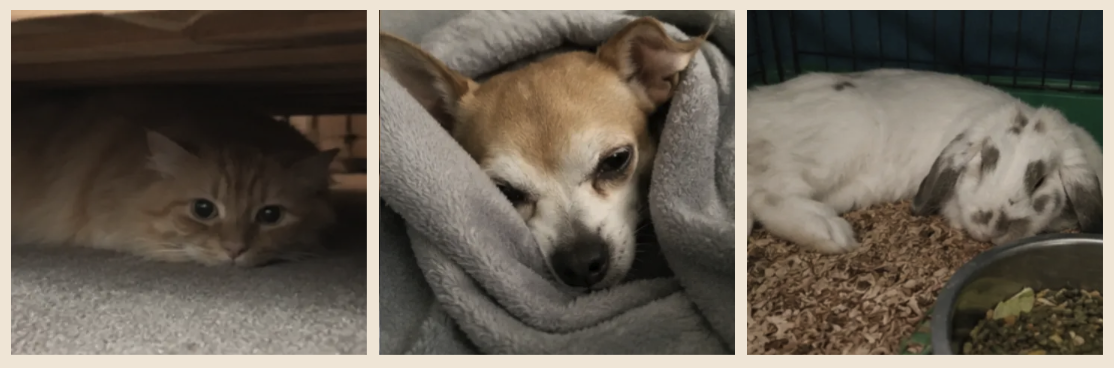
The animal does not look dramatic at first. That is part of the danger.
People expect dehydration to look extreme. They imagine collapse, sunken eyes, severe weakness. But dehydration often begins quietly: dry lips, nausea, headache, fatigue, chills, withdrawal, loss of appetite.
Humans experience this too. Most of us have felt it after a stomach virus or a long day without enough water. Your mouth feels dry. Your stomach feels unsettled. Food sounds terrible. You become tired, foggy, maybe even irritable. The cruel part is that dehydration itself creates symptoms that make rehydration harder.
You feel nauseated, so you avoid drinking.
You feel weak, so getting up for water feels exhausting.
You feel cold, so you curl inward instead of seeking help.
Water Is More Than Water
I think we underestimate how powerful hydration really is because water feels too ordinary to count as medicine.
But bodies run on fluid.
Blood pressure depends on it. Temperature regulation depends on it. Kidney function depends on it. Digestion depends on it. Circulation, oxygen delivery, nutrient transport, waste removal, all of it depends on hydration.
When fluid volume drops, the body immediately begins making trade-offs.
The body protects the brain and heart first. Everything else gets less.
The gut slows down. Appetite disappears. Energy conservation takes over. Movement decreases. The body becomes quieter.
That quietness is often what people misunderstand in pets.
Owners will sometimes tell me, “He’s sleeping a lot because he doesn’t feel good.” And that may be true. But often what I am seeing is not simple fatigue. It is a body trying to survive dehydration.
Small Bodies Have Less Margin for Error
This matters tremendously in small patients.
A 90-pound person has more physiologic reserve than a 6-pound cat. A Great Dane has more reserve than a Chihuahua puppy. Tiny bodies lose fluid fast and have very little margin for error.
When a pet under 10 pounds develops vomiting or diarrhea and stops eating or drinking, things can become dangerous within 24 hours.
Not eventually. Not next week. Quickly.
And because the early signs can look deceptively mild, many owners wait longer than they should.
The pet is hiding.
Sleeping more.
Not interested in food.
Maybe they vomited once or twice.
Maybe they seem “off.”
But underneath those subtle changes, circulation may already be struggling.
Why IV Fluids Can Feel Almost Miraculous
One of the hardest parts of medicine is that the symptoms caused by dehydration can look identical to the symptoms people think are harmless consequences of “a stomach bug.” The dehydration itself creates nausea, weakness, chills, and withdrawal. The worse hydration becomes, the less capable the body is of correcting it alone.
I think this is one reason IV fluids can feel almost miraculous.
Of course they do not cure every illness. Fluids are not magic. But supporting hydration often allows the body to start functioning well enough to recover. Kidneys perfuse better. Nausea improves. Temperature normalizes. Appetite returns. The body stops operating in crisis mode.
Sometimes the most important treatment is not complicated. It is foundational.
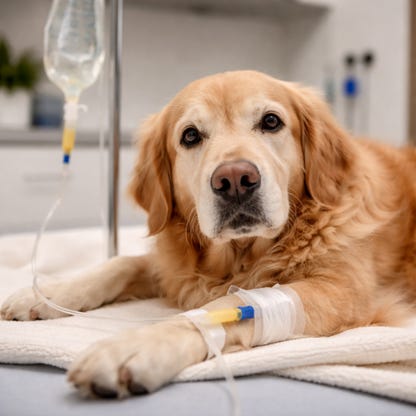
What the Body Does When It’s Running Low
This realization has changed the way I practice medicine.
I pay closer attention to subtle dehydration than I used to. I ask owners more detailed questions about drinking habits, urine output, vomiting frequency, energy level, and body size. I intervene earlier in tiny patients because I know how fast they can decline.
And I spend more time explaining something that sounds deceptively simple: not eating and not drinking are not passive symptoms. They actively worsen illness.
A cat hiding under a bed may not be “being dramatic.” A small dog refusing food may not just be “picky.” Sometimes the body feels so depleted that basic survival behaviors become difficult.
I also think caring for both humans and animals has changed how I interpret withdrawal itself.
When people are dehydrated and sick, many of them want the same thing animals want: darkness, stillness, silence, isolation. They curl inward. They conserve energy. They stop engaging with the world around them.
That overlap humbles me every time I see it.
We spend so much time trying to interpret animal behavior as something mysterious or fundamentally different from our own experience. But often the body speaks a shared language across species.
Pain withdraws.
Nausea withdraws.
Dehydration withdraws.
Small Changes Matter Earlier Than You Think
What I wish every pet owner understood is this: small changes matter earlier than you think they do.
A tiny dog with diarrhea who is no longer drinking is not “fine because it only started yesterday.” A cat who suddenly hides and stops eating may already feel profoundly unwell. Waiting for obvious collapse can mean waiting too long.
Hydration is not secondary support. It is survival physiology.
And maybe that is why I keep returning to this thought lately: one of the most powerful medicines on earth is also the easiest to overlook, precisely because it is so ordinary.
Water rarely feels dramatic.
Until a body no longer has enough of it.

Dr. Melissa Magnuson, DVM
Dr. Melissa Magnuson is the founder of The Conscious Vet and owner of three AAHA-accredited veterinary hospitals in New Hampshire. With 28 years of experience caring for pets and the people who love them, she is passionate about helping pet owners better understand their animals, navigate difficult decisions, and feel more confident about their pet's health and well-being.
Want more stories like this? Subscribe to The Conscious Vet on Substack for weekly essays on pets, veterinary medicine, and the bond between animals and the people who love them.


