
When Fear Spreads Faster Than Disease
May 12, 2026Originally published on The Conscious Vet Substack. Subscribe for weekly essays at theconsciousvet.substack.com.
The first time a client asked me if they should surrender their pet rat because of a news headline, I paused before answering.
Not because the question was unreasonable. Fear has a way of making reasonable people reach for certainty. But because I could see the collision happening in real time: a frightening story in the news, unfamiliar medical language, and a beloved animal suddenly viewed through the lens of danger.
When Headlines Become Personal
This week, that fear arrived through headlines about a cruise ship outbreak linked to hantavirus. Multiple passengers became critically ill. Several people died. Public health officials began tracing contacts and monitoring exposures. The story spread quickly because it touched something deeply human: our fear of invisible threats, especially the ones that cross species boundaries.
And almost immediately, the questions started.
Can my pet rat carry this?
Should I be worried?
Is this another pandemic?
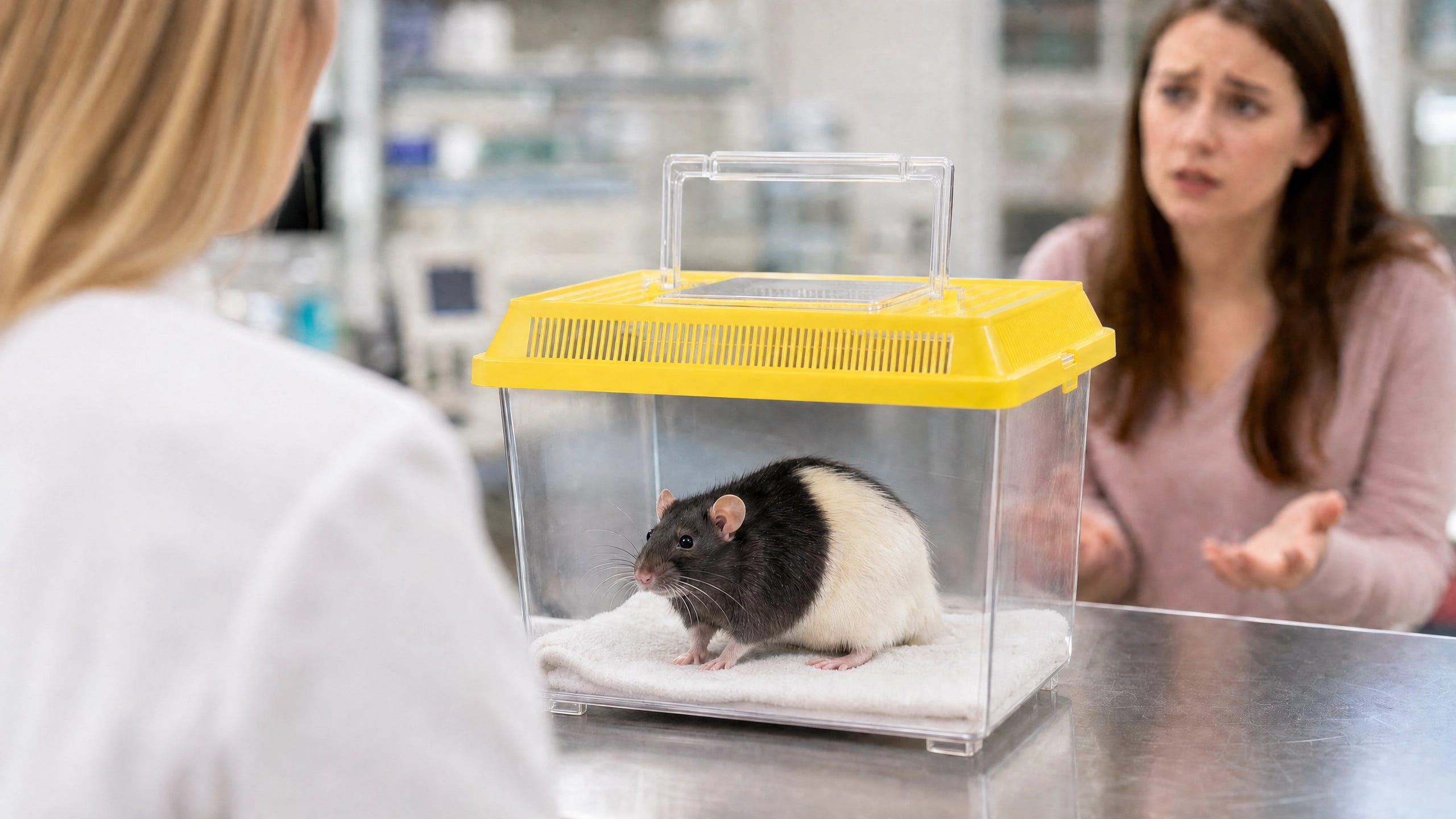
As a veterinarian, I understand why people ask. Zoonotic diseases — illnesses that can pass between animals and humans — sound uniquely unsettling because they remind us that we are not separate from the natural world. We live alongside animals. We share environments, microbes, risks, and vulnerabilities. That interconnectedness is both ordinary and easy to forget until something alarming appears in the news.
The Context Fear Erases
But what often gets lost in moments like this is context.
Hantavirus has existed for a very long time. It is not new. It is not suddenly everywhere. And for most people, the actual risk remains very low.
In humans, hantavirus is typically associated with exposure to infected wild rodent urine, droppings, or saliva — especially in enclosed areas where dried particles can become airborne. Certain strains exist in different parts of the world. The strain involved in the cruise ship outbreak appears to be the Andes virus, which public health experts are watching carefully because it has rare documented instances of possible person-to-person spread.
That sounds frightening, and serious illnesses deserve serious attention. But attention and panic are not the same thing.
The Same Pattern in Veterinary Medicine
I think about this dynamic often because I see a version of it across species all the time.
A dog coughs once after boarding, and owners fear a catastrophic respiratory illness before we even examine the animal.
A cat hides for a day, and families assume the worst because they read something online.
A rabbit stops eating overnight, and someone delays care because they were reassured by internet forums instead of seeking veterinary help.
Meanwhile, the truly common and preventable dangers often receive far less attention because they are familiar.
That’s the part that surprised me most about the hantavirus headlines this week. Not the disease itself, but how quickly fear escalated around something statistically rare while other zoonotic diseases continue to quietly cause far more harm worldwide every year.
Rabies remains one of the deadliest zoonotic diseases on Earth.
Leptospirosis continues to affect both animals and humans and is often under recognized.
Tick-borne illnesses, influenza strains, salmonella exposure from reptiles and backyard poultry — these are not theoretical risks. These are part of everyday veterinary and public health conversations.
But familiarity rarely creates headlines.
Novelty does.
And humans, like animals, are wired to respond strongly to unfamiliar threats.
That doesn’t make people irrational. It makes them human.
Why Medicine Requires Nuance
The challenge is that fear changes how we process information. Once we become frightened, we stop asking, “What is the actual risk?” and start asking, “How do I eliminate uncertainty immediately?”
Medicine rarely works that way.
One of the most important shifts in my own practice over the years has been learning that education is often more therapeutic than reassurance alone. Simply telling someone “don’t worry” rarely helps. What people actually need is context. They need to understand why something matters, how it spreads, what signs deserve attention, and what level of concern matches reality.
Understanding restores proportion.
For example, if someone owns a domesticated pet rat that has been properly bred and cared for indoors, their risk profile is very different from exposure to wild rodents in endemic regions. That distinction matters. Public health guidance matters. Species differences matter. Environment matters.
Fear flattens all nuance into one emotional category: danger.
But good medicine depends on nuance.
This is true in veterinary medicine. It is true in human medicine. And it is especially true when we talk about diseases shared across species.
The Systems Most People Never See
One of the quiet strengths of public health is that much of its success happens invisibly. Surveillance systems, sanitation protocols, outbreak investigations, contact tracing, veterinary monitoring, wildlife research — these systems work continuously in the background long before most people ever hear a headline.
When they work well, the public often never notices them at all.
I wish more people understood that medicine is not simply about reacting to emergencies. It is about pattern recognition, preparation, prevention, and communication. The goal is not to promise zero risk. No living system can offer that. The goal is to understand risk clearly enough that fear does not become more dangerous than the disease itself.
What This Changed in My Practice
That has changed how I speak to clients.
I spend more time explaining probabilities.
I spend more time discussing prevention without catastrophizing.
I spend more time helping people distinguish between “serious” and “likely,” because those are not interchangeable concepts.
And I try to remind people that paying attention is different from panicking.
Fear and panic never serve any situation. Understanding the facts does.
That may be the most important lesson hiding underneath this week’s headlines.
Living Wisely Within Uncertainty
Not that zoonotic disease is unimportant. It absolutely matters. Human and animal health are deeply connected, and we should respect that connection. But respect is different from fear. Respect asks us to stay informed, observant, prepared, and grounded.
Fear asks us to abandon perspective.
What I wish every pet owner understood is that living alongside animals will always involve some degree of shared vulnerability. That is not a failure of nature. It is part of being connected to other living beings. The answer is not to become afraid of animals. The answer is to understand them better. The same can be said for humans. We would all be better off if we understood one another better and were not afraid.
The more we learn about disease ecology, animal behavior, environmental health, and prevention, the more capable we become — not of eliminating uncertainty, but of living wisely within it.
The Pattern I Keep Seeing Across Species
And maybe that is the deeper pattern I keep seeing across species.
Whether it is a frightened client, a stressed animal, or an anxious public watching headlines unfold, the instinct is often the same: react first, understand later.
But medicine works best in the opposite direction.

Dr. Melissa Magnuson, DVM
Dr. Melissa Magnuson is the founder of The Conscious Vet and owner of three AAHA-accredited veterinary hospitals in New Hampshire. With 28 years of experience caring for pets and the people who love them, she is passionate about helping pet owners better understand their animals, navigate difficult decisions, and feel more confident about their pet's health and well-being.
Want more stories like this? Subscribe to The Conscious Vet on Substack for weekly essays on pets, veterinary medicine, and the bond between animals and the people who love them.


