The First Year as a Veterinarian: What Nobody Tells You
Jul 03, 2026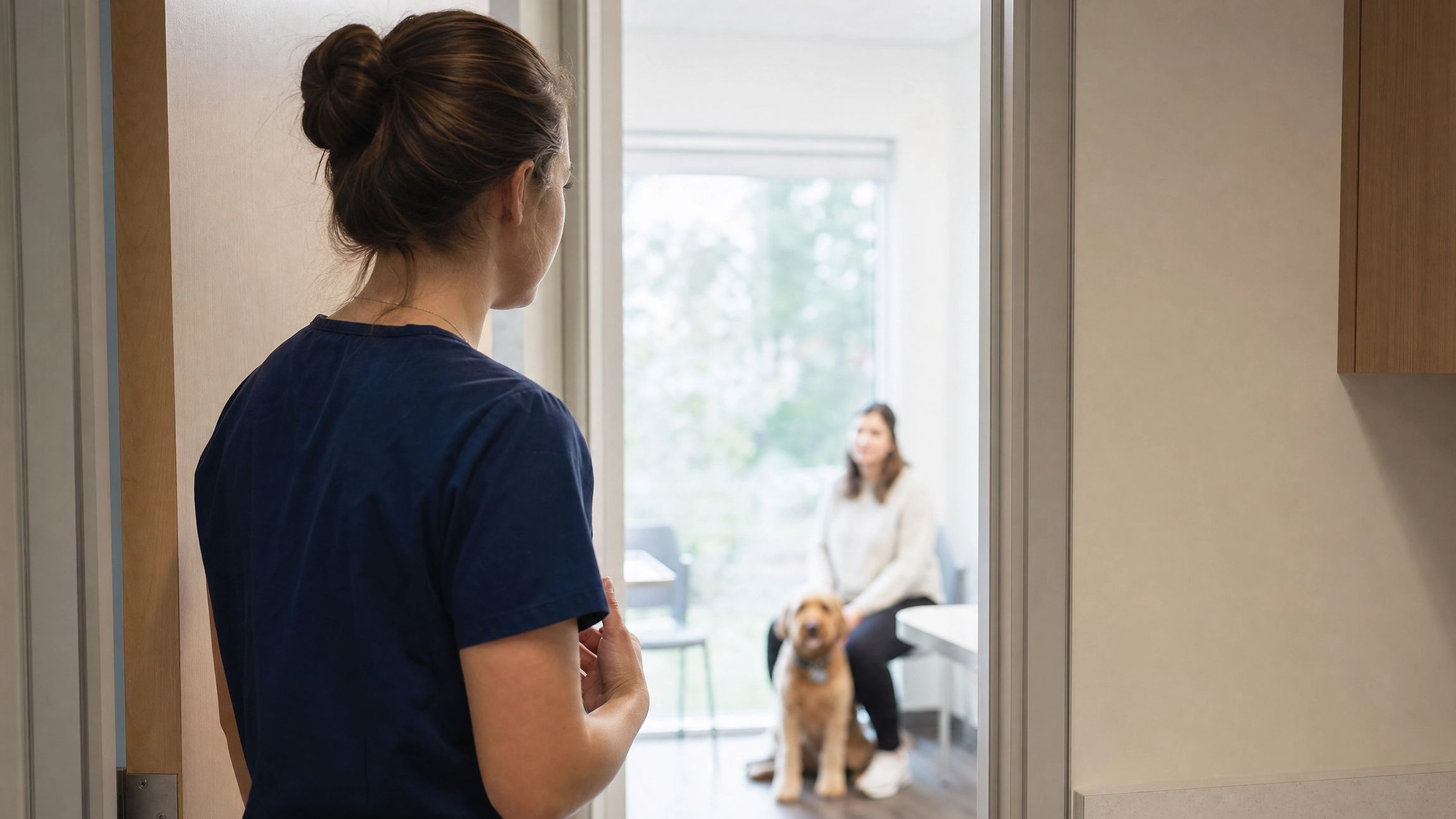
Your first year as a veterinarian is not what you pictured in vet school.
You have the knowledge. You passed the boards. You survived four years of relentless training. And then you walk into your first exam room, and the clinical knowledge that felt so solid suddenly feels very far away — because now there is a real animal, a real owner, and nobody standing behind you with the answers.
This is normal. And it does not mean you are not ready.
What vet school gave you is the science. What it did not give you is the structure — the exam room framework, the communication architecture, the mindset that lets you lead a room confidently even when you are not certain of the outcome. That gap is what the first year is really about. And it is entirely closeable.
Why Imposter Syndrome Hits So Hard in the First Year
Imposter syndrome in veterinary medicine is not a personality flaw. It is a predictable response to a specific structural problem: vet school trains you to know things, but clinical practice requires you to lead — and those are different skills.
The moment you transition from student to doctor, the social contract changes. Clients are not evaluating your test scores. They are evaluating whether they trust you with their pet. That trust is communicated less through what you know and more through how you present what you know. When no one has taught you how to do that, the first few months can feel like performance without a script.
Here is the reframe that changes everything: you are, almost certainly, the most educated person in that exam room. In thirty years of practice I can count on one hand the number of appointments where that wasn't true. Your clients are general pet owners. They are not testing you. They are looking to you for guidance. The authority is already yours — you just have to step into it.
The Mentor Line That Took Me Years to Understand
Early in my career, during an externship, a mentor told me something that confused me at the time.
"Often wrong, but never in doubt."
It sounds reckless. It isn't. What it means is this: doubt, communicated through your body language and tone, destroys client trust faster than a wrong answer ever will. Clients can tolerate a diagnosis that changes as new information comes in. What they cannot tolerate is a doctor who seems uncertain about whether they should be there.
Confidence is not the absence of uncertainty. It is the ability to lead clearly while being uncertain — to say "here is what I know, here is what I need to find out, and here is exactly how we are going to do that." That is what clients need from you. And it is a learnable skill.
How to Walk Into an Exam Room When You're Shaking in Your Boots
Before you touch the door handle, stop. Take one full breath — in through the nose, out through the mouth. This is not a wellness cliché. It is physiology. A single slow exhale activates the vagus nerve and reduces the cortisol spike that makes your voice tighten and your eye contact disappear. It takes four seconds and it works.
Then walk in like you own the room.
Step one: greet the client by name and introduce yourself clearly. Walk directly toward them, make eye contact, and shake their hand. Say "Hi Mrs. Smith, it's so nice to meet you. I'm Dr. Magnuson." A statement, not a question. The handshake and the name establish you as the professional in charge of this appointment.
Step two: immediately greet the pet. Before you do anything clinical, acknowledge the animal. Give them a genuine compliment. This is not small talk. It tells the owner, at a subconscious level, that you see their pet as an individual and not a case number. It breaks their guard and establishes warmth before the harder conversation starts.
Step three: focus the appointment. Ask "What brings you in today?" and then listen. If they give you fourteen concerns, resist the urge to address all of them. Ask "Out of everything you've mentioned, what is your biggest concern today?" That one question gives you a clinical anchor and communicates to the client that you are organized and in control.
The Exam Room Framework That Holds Everything Together
Once you have your chief complaint, work a consistent structure every single time. Consistency is not rigidity — it is cognitive protection. When every appointment follows the same architecture, your brain stops wasting energy on logistics and can focus entirely on the medicine.
Perform the physical exam while narrating it out loud. This is underused and undervalued. When you talk through what you are finding, three things happen simultaneously: you are processing the findings, you are documenting them in the client's mind, and you are demonstrating competence in real time. Clients who hear you think out loud trust you more than clients who watch you work in silence.
State the clinical picture in plain language. No dissertation. No list of differentials with Latin names. One clear sentence that tells the client what is happening, what you think, and that you are being thorough.
Present the diagnostic plan and cost together. This is the step most new graduates handle badly — not because they don't know the medicine, but because they were never taught to talk about money. Separate the plan from the cost and you create anxiety. Present them together and you create clarity. Then stop talking. Allow them space to decide. The silence is not awkward — it is respectful.
If they cannot afford the full plan, adapt without apology. Ask what works for their budget today and build the best possible plan from there. Clients remember the vet who worked with them. They do not come back to the vet who made them feel guilty.
The One Habit That Will Build Your Client Base Faster Than Anything Else
Follow up.
Call the client the next day. Every client, in the beginning — until you are fully booked. Say "Hi, this is Dr. Magnuson following up on Fifi. How is she doing today? Do you have any questions from yesterday?"
This is not common. Most veterinarians do not do it. Which is exactly why it works.
That call communicates three things no appointment can: that you remembered them, that you care about the outcome, and that you are invested beyond the transaction. Clients who receive a follow-up call return at a significantly higher rate and refer more consistently than clients who don't. In the first year, when you are building a schedule from scratch, this habit is worth more than any marketing effort you can make.
Do it until your schedule is full. By then, you will have built the credibility and the client base to sustain a practice career.
What the First Year Is Really Teaching You
The clinical knowledge you need is already inside you. The first year is not about acquiring it — it is about learning to access it under pressure, communicate it clearly, and lead with it confidently. Those are skills, not traits. They are learnable, practicable, and improvable.
One appointment at a time. Every room you walk into is a chance to get slightly better at the thing vet school never taught you. The vets who thrive long-term are not the ones who were born confident. They are the ones who built the structure that makes confidence possible.
You were trained for this. Now learn how to lead it.
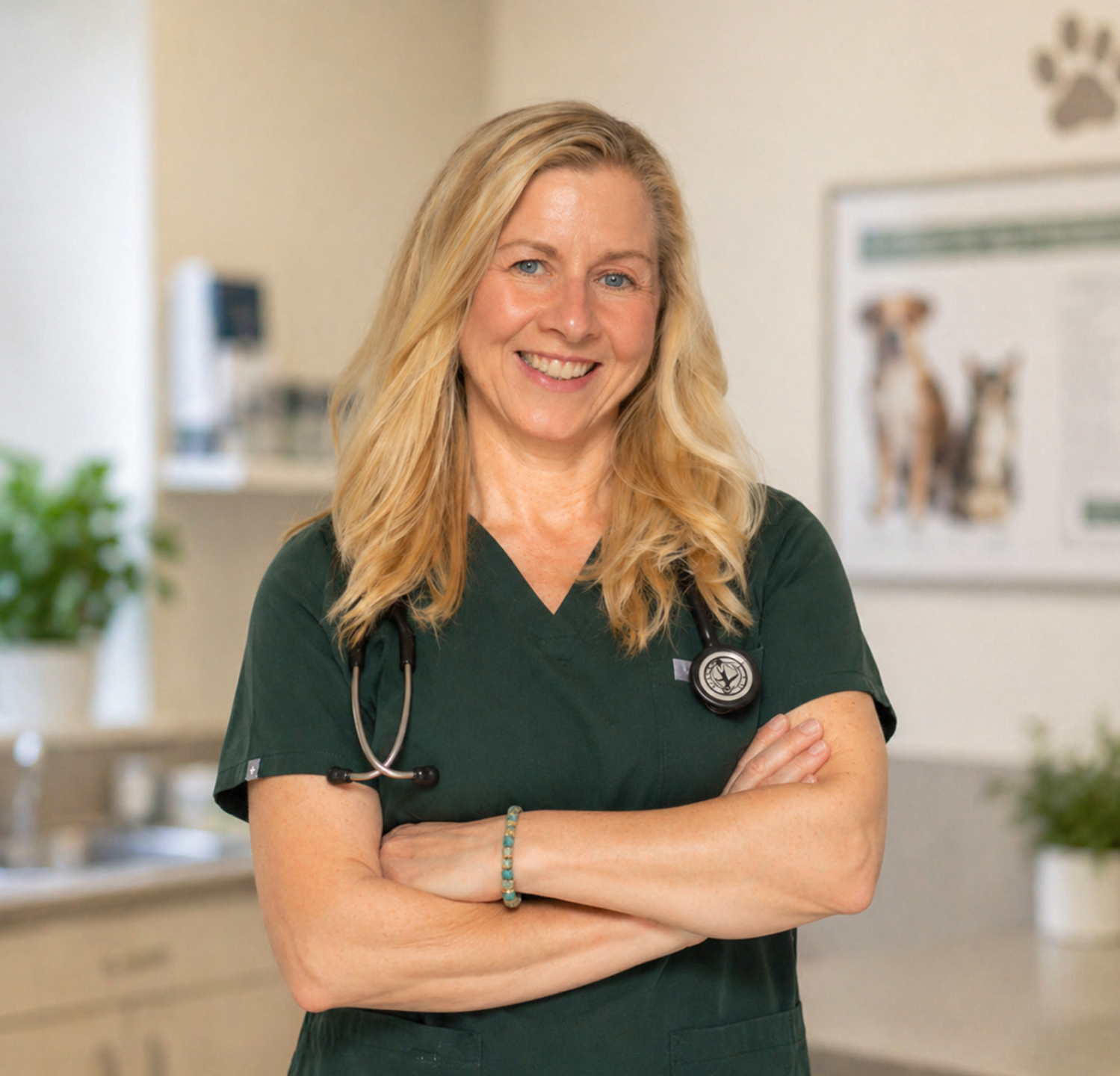
Dr. Melissa Magnuson, DVM
Founder of The Conscious Vet and Conscious Vet Pro, owner of three AAHA-accredited hospitals in New Hampshire, and creator of the Conscious Care™ system. A Director of AAHA and AVMA speaker, she has spent 28 years in practice mentoring more than 30 veterinarians and currently works directly with 17 vets on clinical decision-making, exam room communication, and leadership.
Want the toolkit that helps you show up with more clarity and confidence in the exam room?
Get The Overwhelm Exit